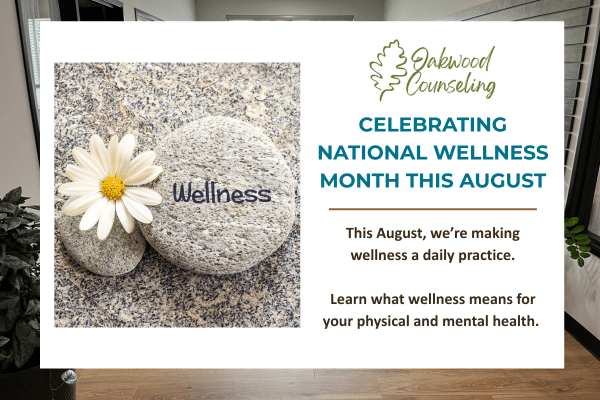
Every August, National Wellness Month invites all of us to slow down and ask, “How am I really doing?” Founded in 2018 by Live Love Spa, this annual event is designed to shift the wellness conversation from luxury to lifestyle, encourage sustainable habits, and remind people that self-care isn’t a reward for getting everything else done. It’s a practice that makes everything else possible.
While wellness is often associated with fitness challenges or clean-eating plans, mental health is just as central to the picture. And, for many people, it’s the part that gets the least attention.
What Mental Wellness Actually Means
First, let’s take a look at what mental wellness means in terms of your overall health. You may think your mental well-being refers simply to the presence or absence of a diagnosable condition, like anxiety, depression, or OCD. However, the World Health Organization defines health as “a state of complete physical, mental, and social well-being and not merely the absence of disease or infirmity.” By that standard, mental wellness is something we actively cultivate, not a baseline we either have or don’t have established.
Wellness as a whole includes how we manage stress, how we relate to others, how we process difficult emotions, and how much meaning and purpose we find in daily life. Like physical fitness, it exists on a spectrum and requires consistent attention to maintain.
How Mental Wellness Connects to Physical Health
Research consistently shows that the “big three” healthy lifestyle factors — sleep, diet, and exercise — have a direct and measurable effect on mental health. Regular physical activity has been shown to reduce symptoms of depression and anxiety, improve mood, and promote better sleep, while eating well supports brain health and emotional stability. And adequate sleep (most adults need seven to nine hours) is vital for cognitive function, emotional regulation, and resilience.
These connections work in both directions. When mental health suffers, physical health tends to follow through disrupted sleep, reduced energy, and difficulty maintaining routines. Building habits that support both is one of the most important investments you can make for your overall well-being.
Five Daily Habits That Support Mental Wellness
So, how can you prioritize both your mental and physical health this National Wellness Month (and beyond)? Let’s review some daily habits you can implement now to kickstart your well-being.
- Prioritize Sleep
Sleep deprivation affects cognitive function, mood, and stress tolerance. Improve how you feel during waking hours by developing consistent sleep habits:
- Regular bedtime and waking time
- Limiting screens before bed
- Keeping your room cool and dark
- Get Moving
Exercise doesn’t need to be intense to be beneficial. Studies suggest that the more movement people accumulate throughout the day, the better their sleep and mental health tend to be, without any specific threshold where benefits suddenly kick in. Even a brief walk around the block after lunch counts!
- Protect Your Relationships
Decades of research have shown how crucial social support is for both physical and mental health. People with limited social support often experience lower moods and poorer physical well-being, while the opposite is true for those with larger and more supportive social circles. Connection doesn’t require grand gestures — regular, meaningful contact with people you trust is what matters.
- Take Time to Pause
Whether it’s a few minutes of mindful breathing, a few pages of a book, or a quiet morning routine, intentional pauses reduce the accumulation of stress that grinds down mental wellness over time. Even five to ten minutes of consistent daily mental health practices like these can create significant benefits.
- Set Boundaries
Setting boundaries is a foundational wellness skill that most of us were never explicitly taught. Not all stress is avoidable, so it’s important to control what stressors you can. This means evaluating where your energy goes and learning to say no to commitments that consistently drain rather than sustain you.
When Self-Care Isn’t Enough for Your Mental Wellness
In addition to encouraging us to take better care of ourselves, National Wellness Month is also a useful reminder that professional support is part of wellness and not a sign that your self-care efforts have failed. Therapy and counseling are tools in a wellness toolkit, not last resorts – just as you’d see a physician for physical concerns, a therapist can help you identify patterns, build skills, and address underlying challenges that daily wellness practices alone won’t resolve.
If you’ve been meaning to look into counseling, revisit your mental health, or to simply check in with a professional, August is as good a time as any to start.
Oakwood Counseling: Your Partner in Ongoing Wellness
At Oakwood Counseling, we work with individuals, couples, and families throughout the Brazos Valley, as well as across Texas via telehealth, not just during crises, but at any point in the wellness journey. Whether you’re managing a specific concern or simply want support building a more sustainable version of your daily life, we’re here.
Ready to make mental wellness part of your August? Schedule an appointment with Oakwood Counseling or call us at (979) 229-7636.
Sources
National Today — National Wellness Month
World Health Organization — Definition of Health
American Psychiatric Association — Lifestyle to Support Mental Health
MindBodyGreen — Daily Movement, Sleep & Mood Research
BestMind Behavioral Health — National Wellness Month 2025 Guide
Harbor Mental Health — Sleep, Diet, Exercise, and Mental Health
Frequently Asked Questions
How long is each counseling session?
The standard session is 50 minutes, but we can adjust that for more or less time depending on your needs.
How often should I attend therapy?
Most begin with weekly sessions, but the frequency of your sessions is a decision you make in consultation with your therapist.
Do I need a diagnosis to start therapy?
No. You can start therapy anytime.
Contact Oakwood Counseling – College Station & Bryan, TX
Website: https://www.oakwoodcounseling.com/
Phone: (979) 229 7636
Location:1100 Briarcrest Dr Bryan, Texas 77802
Schedule your ADHD Evaluation today.