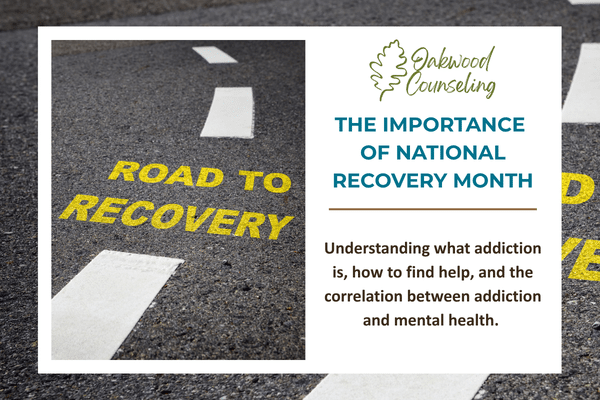
September is National Recovery Month, an important month that has been observed every September since its launch by SAMHSA in 1989. It got its start as “Treatment Works! Month,” evolving over time into a broader national observance that honors people in recovery, supports those still struggling, and works to dismantle the stigma that keeps too many from reaching out.
This September, we’re taking a moment to reflect on the month, explain what addiction actually is, why mental health and substance use so often show up together, and what recovery really looks like, including where counseling fits in.
What Is Addiction?
First, it’s important to understand what addiction is, and what it isn’t. Addiction is a chronic condition, not a moral failure. It’s not the result of weak willpower, poor character, or bad choices, though these are myths that persist and cause real harm. In fact, stigma and shame around addiction are two of the most common barriers between people and addiction treatment. Myths like “being addicted to drugs is a choice” or “addicts lack the willpower to get sober” can prevent people from helping those they care about and can shame people with addictions from reaching out for much-needed help.
According to SAMHSA, approximately 20 million Americans aged 12 or older are in recovery from substance use disorders. More, 1 in 10 people in the U.S. admits to having a substance use disorder at some point in their life, with nearly 75% being in recovery. These figures reflect both the scale of the problem and the fact that recovery is not only possible, but common.
Why Mental Health and Substance Use So Often Co-Occur
One of the most important and least understood aspects of addiction is how frequently it occurs alongside mental health conditions. In fact, approximately half of people with severe mental disorders also experience substance use disorders. Similarly, 37% of alcohol abusers and 53% of drug abusers also have at least one serious mental illness.
This isn’t a coincidence. Substances are often used by people to self-medicate anxiety, depression, trauma, or other conditions that haven’t been identified or treated. Many of them, in turn, have both addiction and mental health problems because one informs the other, such as drinking alcohol because of depression or using drugs to deal with anxiety. This is known as a dual diagnosis.
Understanding this connection matters, because treating one condition without the other tends to produce incomplete results. Worse, not dealing with both mental health and substance use root causes in a personalized, structured way results in a higher risk of relapse.
What Recovery Actually Looks Like
Recovery is not a single event or a straight line. It looks different for every person, and often includes setbacks. The average number of attempts before substance use disorder recovery is achieved is five, though the median is two, with a small number of individuals with the greatest addiction severity pulling that average upward. This context matters: setbacks are part of the process for many people, not evidence that recovery isn’t possible.
Recovery may involve any combination of:
- Medical treatment and medication-assisted therapy for withdrawal and cravings
- Integrated treatment for co-occurring mental health and substance use conditions
- Individual and group therapy to address underlying emotional patterns and build coping skills
- Peer support programs such as 12-Step or SMART Recovery, which provide sober community and accountability
- Ongoing aftercare, including counseling and recovery-focused support groups
Only a Fraction of People Who Need Help Get It
Only about 13% of people with drug use disorders receive any treatment. This gap isn’t primarily about willingness to get help, but about stigma, access, cost, and not knowing where to start. National Recovery Month exists partly to close that gap, normalizing the conversation around addiction, providing information and resources, and reminding people that asking for help is the first step.
How to Support Someone in Recovery
If someone you love is in recovery or still struggling, here are some of the most important things you can do:
- Educate yourself. Understanding addiction as a health condition, not a choice or a character flaw, changes how you show up.
- Listen without judgment. Recovery requires honesty, and honesty requires safety. Being a non-judgmental presence matters more than having the right thing to say.
- Encourage professional support without ultimatums. Pressure often backfires. Consistent, caring encouragement tends to work better.
- Take care of yourself, too. Supporting someone through addiction or recovery is emotionally demanding. Your own mental health matters in this equation.
- Know that real conversations make a real difference. The CDC has noted that meaningful conversations between people in recovery and those who care about them are among the most powerful tools available.
How Oakwood Counseling Fits In
Mental health counseling is a core component of comprehensive addiction recovery, not an add-on. At Oakwood Counseling, we offer individual therapy and group therapy for clients across the Brazos Valley in person and throughout Texas via telehealth.
Whether you’re in early recovery, supporting someone who is, or wondering whether what you’re experiencing might be more than a habit, we’re here to help you figure out the next step.
Ready to talk to someone? Reach out to Oakwood Counseling or call us at (979) 229-7636 to learn more.
—–
Resources:
National Today
NAADAC
National Recovery Month History and Purpose
Mt. Sinai Wellness
National Recovery Month: History, Purpose, and Impact
American Addiction Centers
No Matter What Recovery
CDC
Frequently Asked Questions
How long is each counseling session?
The standard session is 50 minutes, but we can adjust that for more or less time depending on your needs.
How often should I attend therapy?
Most begin with weekly sessions, but the frequency of your sessions is a decision you make in consultation with your therapist.
Do I need a diagnosis to start therapy?
No. You can start therapy anytime.
Contact Oakwood Counseling – College Station & Bryan, TX
Website: https://www.oakwoodcounseling.com/
Phone: (979) 229 7636
Location:1100 Briarcrest Dr Bryan, Texas 77802
Schedule your ADHD Evaluation today.